Making new friends after 50 involves dealing with a documented paradox. The Solitudes 2025 study, conducted by the Fondation de France and Crédoc, shows that relational isolation remained largely stable between 2024 and 2025, while the feeling of loneliness increased during the same period.
In other words, the number of contacts says little about the feeling of being surrounded. Sharing passions and forming friendships at this stage of life requires more than just a well-filled address book.
Felt Loneliness After 50: What Recent Data Shows
The distinction between measurable isolation and perceived loneliness changes the way we approach the subject. A person who attends a walking club, has lunch with former colleagues, and calls their children every week can still feel a relational void. The Solitudes 2025 study confirms this gap on a national scale.
Geography also plays a role. Crédoc data indicates that relational isolation is more pronounced in rural areas, while the feeling of loneliness is more common in large urban areas. In rural areas, the problem often stems from the scarcity of shops, associations, and transportation. In cities, it’s the anonymity and difficulty in forming close ties that weigh heavily.
This geographical distinction has a direct consequence: the solutions that work in a town of 2,000 inhabitants are not the same as those suitable for a metropolis. Seeking new friends after 50 begins with identifying the type of difficulty one faces, not by applying a one-size-fits-all recipe.
Community platforms exist to facilitate these meetings among seniors, such as le-club-des-seniors.com, which connects people with shared interests.
Small Group Activities: The Format That Fosters Friendship After 50
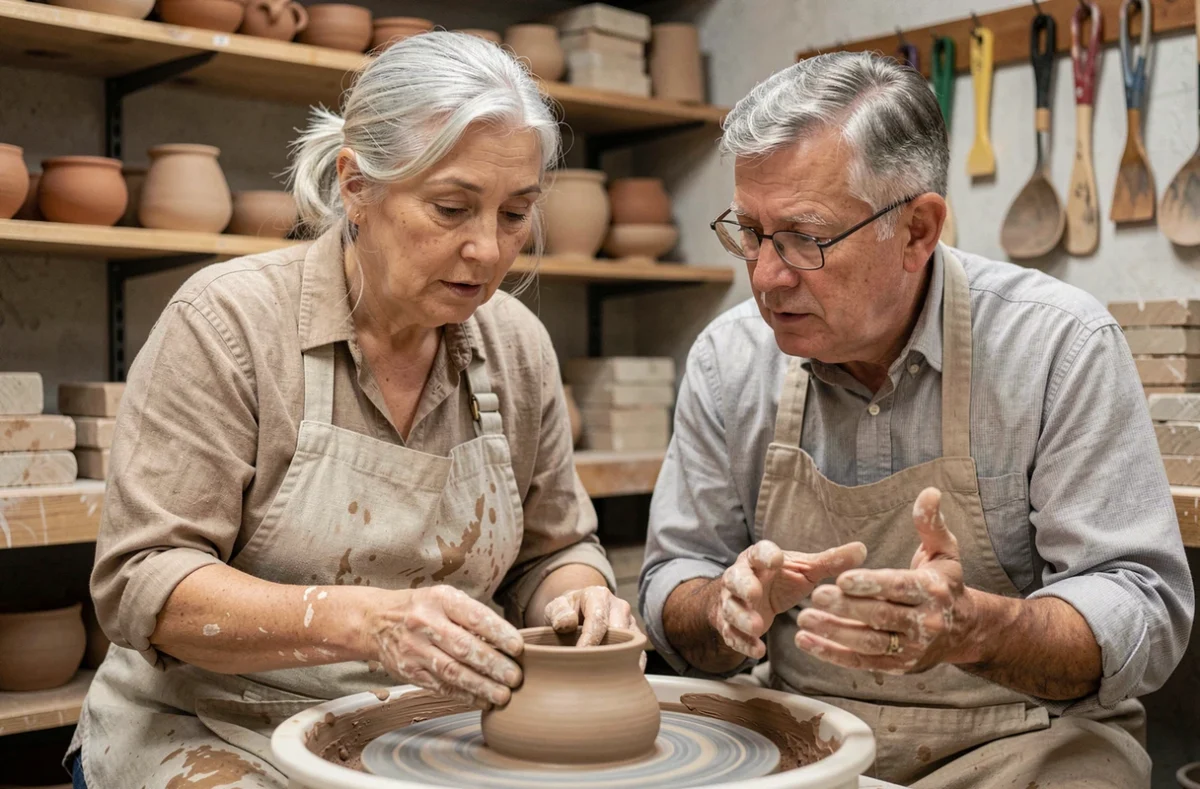
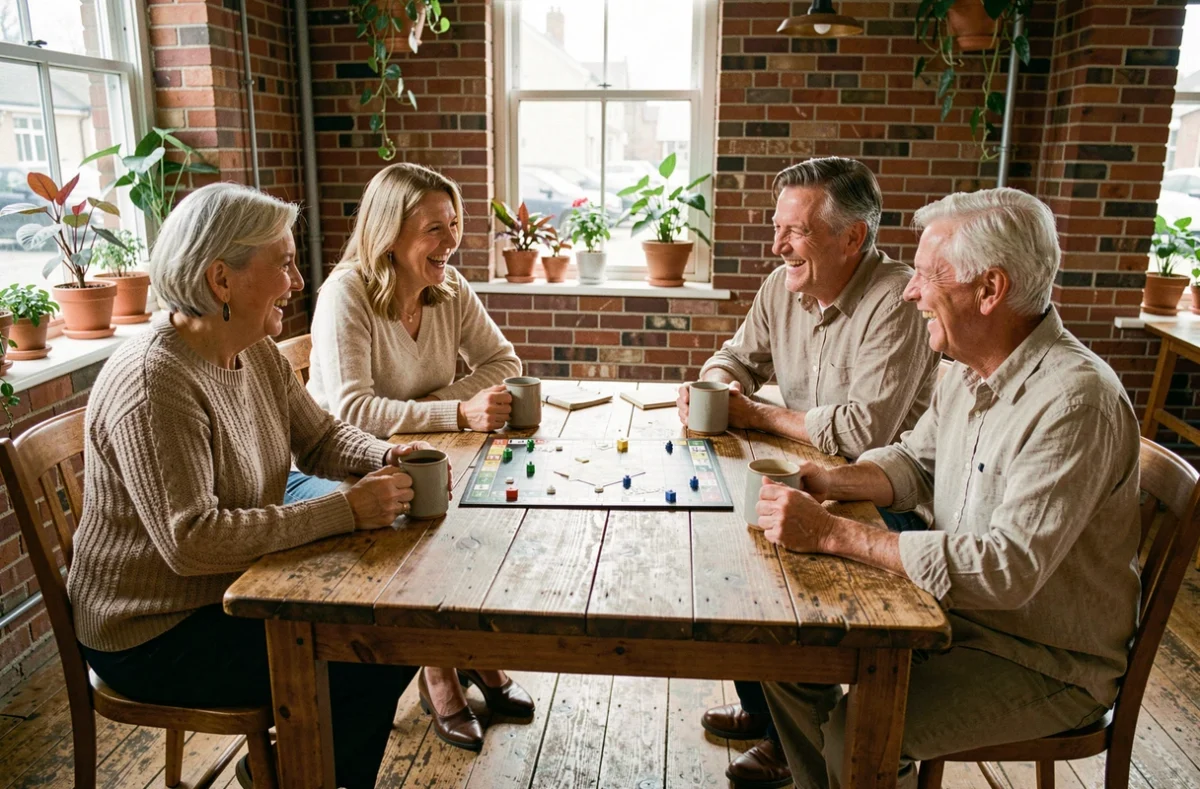
Field actors working with seniors prefer a specific format: shared activities in small groups. Cooking workshops, writing classes, hiking groups, community gardening sessions. The common point of these proposals is that they create regularity and physical proximity, two conditions that social psychology research has long identified as necessary for forming bonds.
Regularity matters more than the nature of the activity. Meeting the same people each week around a ceramics workshop creates more lasting connections than a large one-off event where one encounters fifty strangers. The small group (six to twelve people) allows for real exchanges, not just surface conversations.
Why Volunteering Works Differently
Volunteering is often cited as a way to meet people after 50. It works, but not for the same reasons as a leisure workshop. Volunteering creates a sense of usefulness that boosts self-confidence, and this confidence then facilitates openness to others.
However, some forms of volunteering can be very solitary: food sorting in a warehouse, telephone helplines, administrative management. For volunteering to become a vector for friendship, one must choose missions where work is done together, with informal times (breaks, shared meals).
Shared Passions and Social Links: Going Beyond the Simple Activity
Participating in a painting class or a book club does not always suffice to turn an acquaintance into a friend. The transition from an activity relationship to a personal relationship is a threshold that many people over 50 struggle to cross.
Field feedback varies on this point. Some senior group leaders observe that friendships naturally form after a few months of regular attendance. Others find that participants remain side by side for years without ever seeing each other outside the activity context.
Creating a Second Opportunity to Meet
The factor that seems to shift a relationship from acquaintance to friendship is the creation of a second meeting context. Suggesting coffee after the workshop, organizing a cultural outing outside the usual setting, inviting someone to discover another of their passions. It is the shift from a single context to multiple contexts that transforms a contact into a friend.
This approach requires personal initiative, which is not always easy. After 50, the fear of bothering or being perceived as intrusive holds many people back. Testimonials collected by regional press confirm this: some individuals describe a form of resignation in the face of the perceived difficulty of creating new ties.
Digital Life and Meetings Among Seniors: Possibilities and Limits
Digital platforms dedicated to seniors have multiplied in recent years. Thematic forums, social media groups, friendship dating apps: the options are available. For people living in rural areas or with limited mobility, digital access sometimes remains the only way to connect with a wider social network.
The limitations are well-known. An online exchange does not produce the same effect as a physical meeting on the feeling of loneliness. Digital tools work better as a bridge to a real meeting than as a lasting substitute. Available data do not allow us to conclude that friendships formed exclusively online provide the same health and well-being benefits as in-person relationships.
The question of personal data protection also arises, particularly for an audience that may be less familiar with privacy settings. Signing up for a community platform requires checking a few concrete points:
- Do the terms of use specify how data is processed and whether it is shared with third parties?
- Does the platform allow control over the visibility of one’s profile and personal information?
- Is there a reporting mechanism in place for inappropriate behavior or unwanted commercial solicitation?
These precautions are not specific to seniors, but they deserve particular attention when starting on this type of service.
Meeting new friends and sharing passions after 50 does not rely on a single recipe or tool. The regularity of meetings, the choice of small group activities, the initiative to create a second relationship context, and the reasoned use of digital tools form a coherent whole. The feeling of loneliness is not resolved by the quantity of contacts but by the quality of the ties, and this quality is built over time.