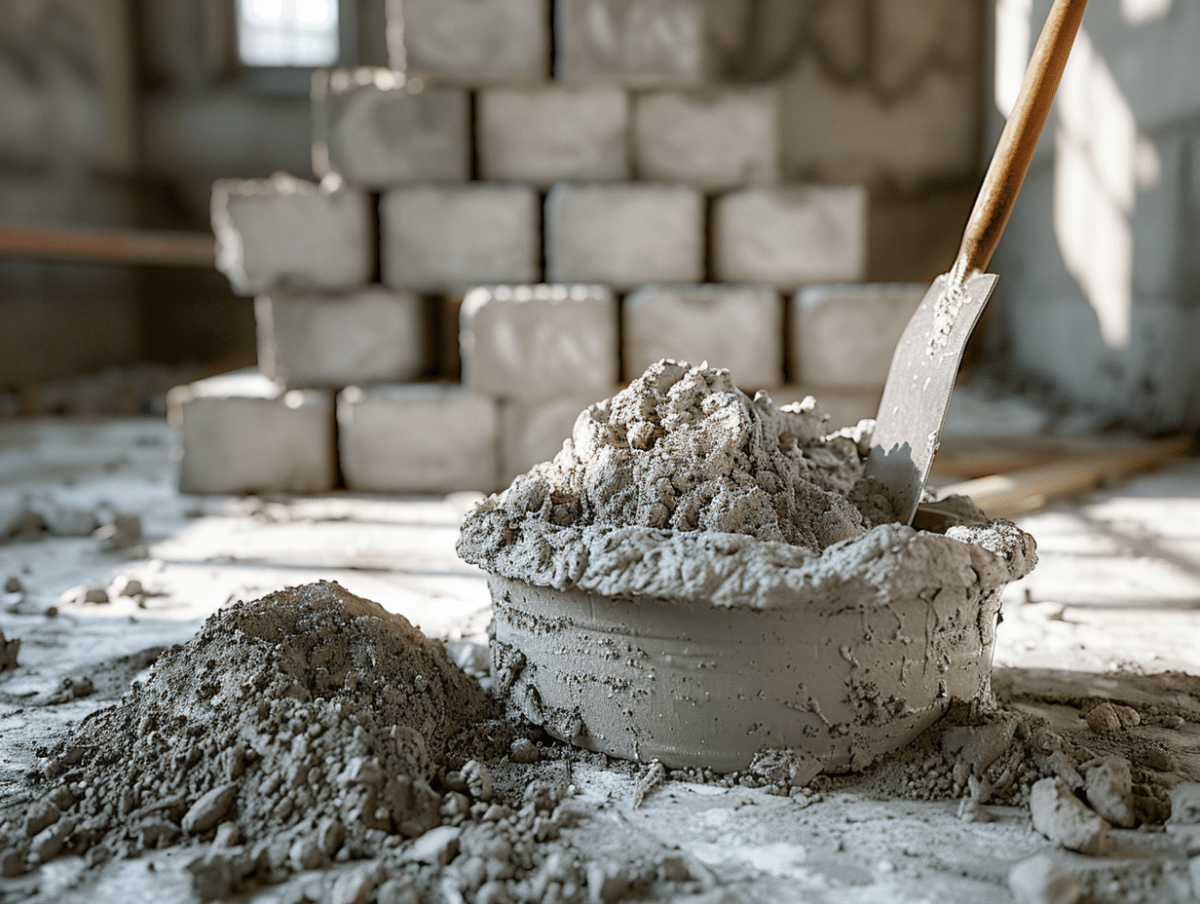
Building a block wall is a task that requires precision and expertise, especially when it comes to preparing the mortar, an essential element for the strength of the structure. The mixing of mortar for assembling blocks must meet specific standards, ensuring both cohesion and durability of the structure. Mastering the proportions of the components – cement, sand, water, and possibly additives – is fundamental to achieving a high-performance mix. An adequate mix withstands weather conditions and supports loads, thus ensuring the safety and longevity of the foundations and load-bearing walls.
The Fundamentals of Mortar Mixing for Blocks
The mortar mix for blocks requires special attention. To ensure the solidity of the construction, the components of the mortar – cement, sand, water, and, if necessary, additive – must be mixed in the right proportions. Using a mortar mixing chart for blocks is a proven method to achieve the correct proportions, essential for the integrity of the building.
Cement, the cornerstone of this mix, comes in various types such as Portland Cement or natural quick-setting Cement, classified as CEM I, CEM II, CEM III, CEM IV, CEM V, depending on their composition. This variety offers specific characteristics that affect the setting time and strength of the mortar. The choice of cement therefore depends on the technical and environmental requirements of the construction project.
As for the sand, it must be clean and free of impurities to ensure good adhesion of the mortar to the blocks. Consider the volume of sand, which, combined with the cement, determines the workability and compactness of the mortar. Water, on the other hand, plays a fundamental role in the hydration of the cement. It must be measured precisely to avoid a mix that is too liquid or too dry, which would harm the quality of the masonry.
The additive, while optional, can be included to improve certain properties of the mortar, such as its frost resistance or water retention capability. Mixing in a concrete mixer or an electric mixer ensures a homogeneous consistency, a prerequisite for optimal use of the mortar. Mastering the mortar mix for blocks is an art that requires precision and understanding of the materials used.
Procedure and Tips for Accurate and Effective Mixing
Following the mortar mixing chart for blocks is a principle to be adhered to rigorously. This chart guarantees a mix with the right proportions, an essential condition for resilient masonry. Therefore, it should be consulted carefully, and the indicated quantities for cement, sand, and water should be applied. Using precise measuring equipment – scale, graduated bucket – is recommended to avoid any approximation that could compromise the strength of the foundations.
The mixing process requires suitable tools such as a concrete mixer or an electric mixer, which allow for a homogeneous paste without lumps. The consistency of the mortar is a determining factor: neither too liquid, to avoid sagging of the blocks, nor too thick, to ensure good workability and easy application. A well-mixed mortar spreads easily and envelops the blocks uniformly, contributing to the balance of the structure.
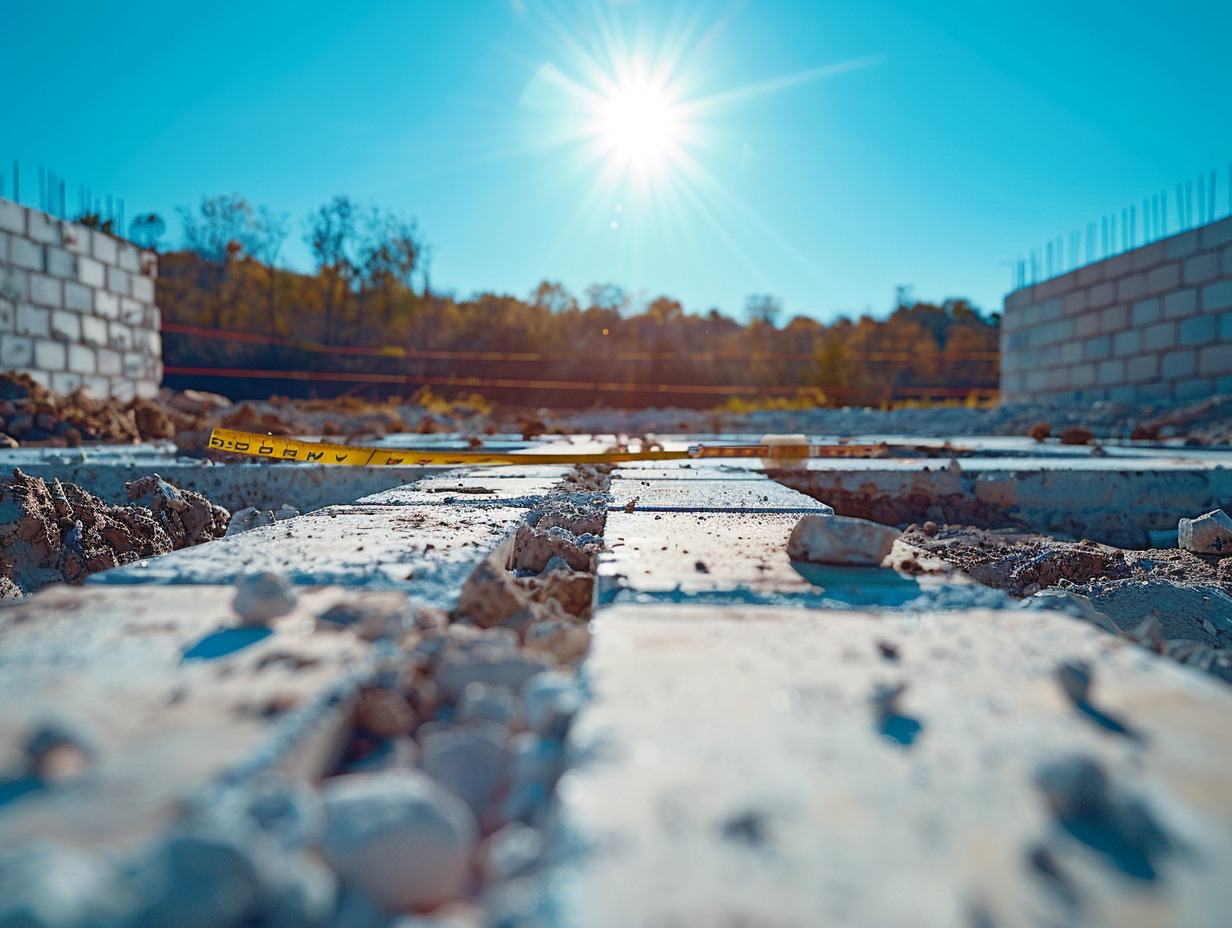
Consider the working environment and weather conditions that influence the behavior of the mortar. In hot and dry weather, the rapid evaporation of water can accelerate the setting of the mortar and reduce working time. Conversely, in humid or cold weather, additional precautions may be necessary to protect the mortar and ensure its proper setting. Application tips, such as moistening the blocks before laying them or adding an additive to adjust the setting time, optimize the use of the mortar and adapt to the specificities of the job site.