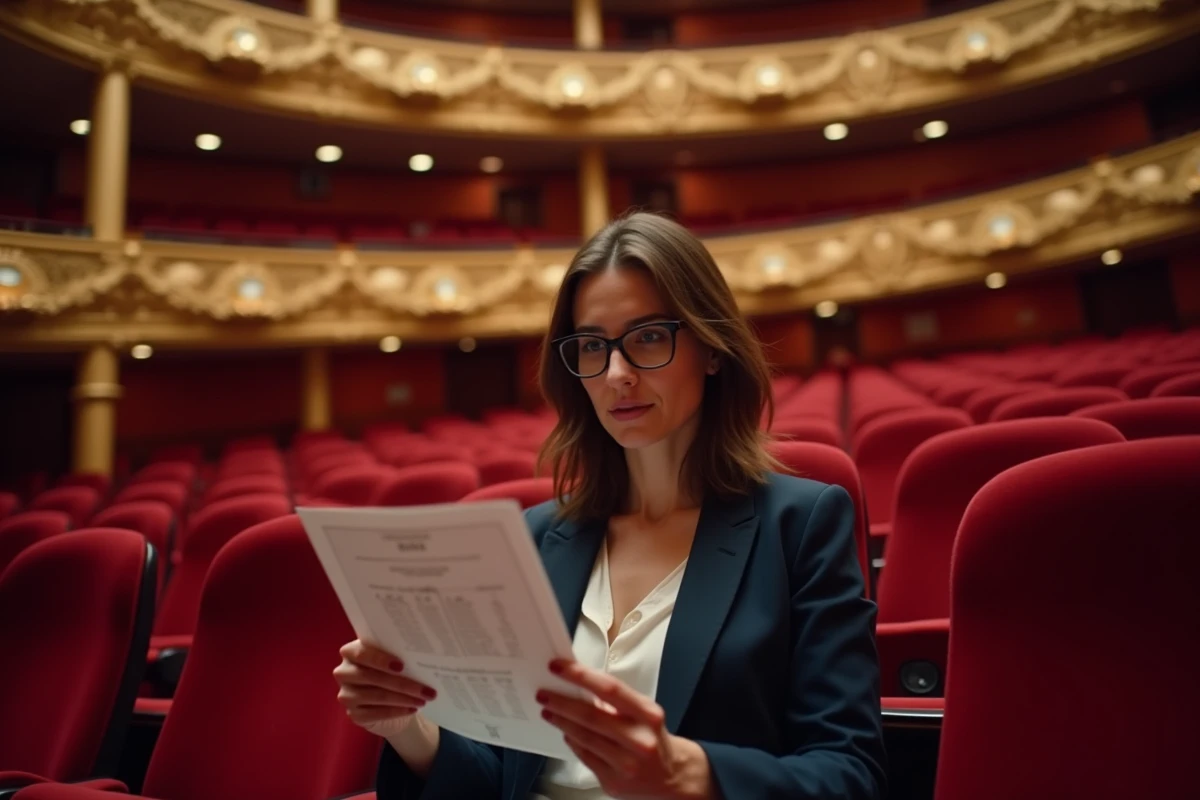
The geometry of the Théâtre Mogador imposes acoustic and visual constraints that the simple seating plan does not convey. The staging of The Lion King exploits the depth of the stage, the aisles of the orchestra, and the height of the flies, making some seats significantly more effective than others depending on the criterion you prioritize.
Supertitles and screens at the Théâtre Mogador: an underestimated placement criterion
The official seating plan published by Parisinfo indicates a visibility zone dedicated to the supertitle screens. This mention changes the traditional reading grid of seating placement. In a production like The Lion King, where the sung lyrics carry part of the narration, missing the supertitles means missing lines.
The side seats of the orchestra, beyond seat 25 on each side, suffer from too tight an angle to comfortably read these screens. The problem worsens in the side boxes, where the elevation does not compensate for the horizontal offset.
We recommend checking, at the time of booking, if the chosen seat falls within this visibility zone. Ticketing platforms do not always indicate this, but the Parisinfo document remains the reference. Identifying the best seats for The Lion King at the Théâtre Mogador also involves this criterion, which is too often reduced to just the line of sight to the stage.
Orchestra of The Lion King: central rows versus front rows
The orchestra remains the most sought-after category, but not all rows are equal. The front rows (A to F) place the spectator below the stage level. The opening parade, designed to be seen from a slight elevation, loses some of its impact when viewed from below.
Rows N to Q, in the center, offer the best compromise between distance and proximity. Julie Taymor’s scenography uses large-scale puppets (the giraffe, the elephant) whose proportions can only be properly appreciated from a minimum distance. Too close, the gaze fixates on the puppeteers rather than the animal silhouettes.
Side aisles and actor passages
The Lion King has actors and puppets moving through the orchestra aisles. Seats directly facing these aisles enhance immersion but lose comfort if you dislike close passages. Rows M to P on the central aisle combine stage proximity with access to the staging’s circulation.
Balcony and Mogador box: value for money of high seats
The first balcony rows A to C constitute a serious alternative to the central orchestra. The slight elevation accurately conveys the depth of the stage and the crowd movements in the opening scene. The central balcony offers a panoramic view that the orchestra does not provide.
The box, positioned between the orchestra and the balcony, presents a more nuanced case. The central box seats rival the balcony, but the side ends quickly lose angle on the distant stage. A side box seat beyond seat 20 cuts off part of the scenery on the stage left or stage right.
Comfort and show duration
The production lasts about 2h30 with an intermission. This factor weighs on the choice, especially in the balcony where the space between rows is more limited than in the orchestra. Tall spectators or those accompanying young children will benefit from checking the proximity of exits for the intermission.
- Balcony rows A-C center: panoramic view, good compromise of price and visibility, quick access to stairs for the intermission.
- Central box: decent immersion and sufficient elevation, but seats are tighter than in the orchestra.
- Side box beyond seat 20: significant loss of angle, supertitles partially obscured, to be avoided if the readability of the lyrics matters to you.
Children’s seats for The Lion King: choose based on the staging
Taking children to The Lion King requires thinking about placement differently. A child sitting too low in the orchestra will mainly see the edge of the stage and the heads of the rows in front. Booster seats are not always available, and their effectiveness remains limited in rows A to H.
The elevated rows of the orchestra (starting from row L) or the first balcony offer a more natural line of sight for a child. The slight elevation of the balcony places the stage within the visual field without requiring a posture adjustment.
- Favor aisle seats to facilitate a discreet exit if necessary.
- Avoid side ends where large puppets occasionally block the view.
- Matinee performances, often less crowded, allow more flexibility to change seats after the intermission if the seat is not suitable.
Variable sessions and times
The programming at Mogador offers times that vary by day. Evening performances sell out faster than matinees, which reduces placement options. Booking early allows access to central rows before they are locked by group booking blocks.
Placement at the Théâtre Mogador for The Lion King is not limited to an opposition between orchestra and balcony. The visibility of the supertitle screens, the angle on the large-scale puppets, and the duration of the show with intermission are three technical parameters that guide the choice well beyond just the pricing category.