
Loading a riding mower onto a trailer, putting an ATV on a platform, or moving a generator: each time, the loading ramp makes the difference between a smooth operation and a moment of struggle. At Brico Dépôt, the department offers several models at competitive prices, but not all are suitable for every use.
Before relying solely on the “load capacity” label, it’s essential to take a closer look at a few details that can make all the difference in everyday use.
Open ramps and small wheels: the trap that no one mentions in the aisle
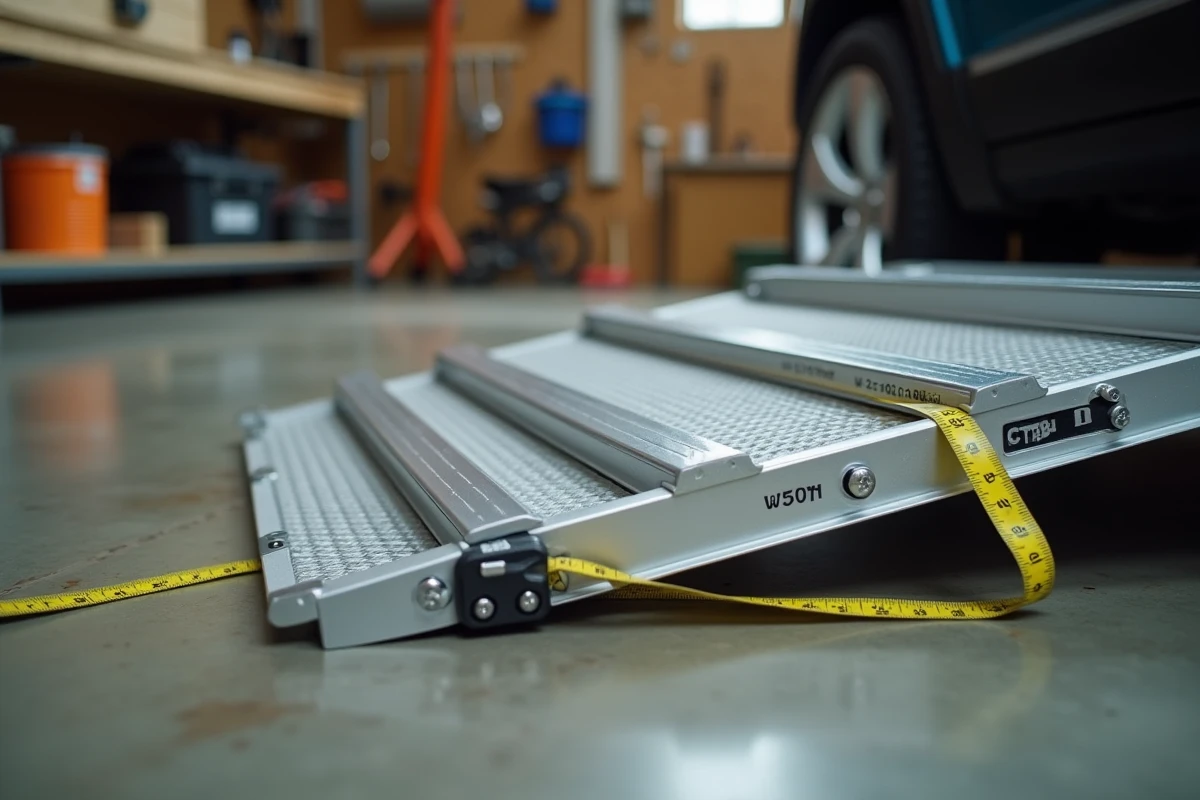
Have you ever tried to roll a folding hand truck or a wheeled suitcase over a metal grid? The wheels get stuck in the gaps, vibrate, and the load becomes unstable. This issue directly affects the open aluminum ramps sold in DIY stores.
These models are designed to allow water and mud to pass through, making them practical for outdoor use. However, their openings can trap any wheel or caster with a diameter smaller than the width of the openings.
If you plan to use your ramp for moving, small wheeled garden equipment, or household appliances, check this point before purchasing. A ramp with a solid surface or very fine grating will be much more suitable, even if it costs a few euros more. To better understand this criterion among others, knowing how to choose a Brico Dépôt loading ramp helps avoid ending up with a model unsuitable for your actual needs.

Aluminum or steel: which material for which loading ramp use
At Brico Dépôt, ramps are mainly divided into two material families. The choice between the two is not just a matter of budget.
Aluminum, lightweight but sensitive to twisting
An aluminum ramp is easy to handle. One person can take it out of the trunk and set it up. This is a real advantage for occasional use.
The downside: entry-level aluminum ramps deform under point loads. User feedback indicates localized twisting when loading a rubber-tracked machine or when rolling with a motorcycle stand positioned off-center on the ramp. The displayed load capacity assumes a weight evenly distributed, not concentrated on a few square centimeters.
To limit this risk, placing a distribution board under the feet or tracks of the machine protects the ramp and extends its lifespan.
Galvanized steel, robust but heavy
Steel models better withstand localized loads. They tolerate offset supports and resist twisting. Galvanized steel is suitable for heavy loads and frequent use, especially for individuals who regularly load construction equipment or motorized machines.
The trade-off is obvious: weight. Expect to rely on a second pair of hands for installation or plan for accessible ground storage space.
Incline angle and ramp length: the calculation that few DIYers make
The length of the ramp determines the incline angle. The shorter the ramp in relation to the height of the platform or trailer, the steeper the slope. Beyond a certain angle, even a motorized machine can slip, and a wheeled load can roll back.
A gentle slope reduces the risk of tipping and slipping. Specifically, for a trailer with a platform at knee height, a ramp of one meter fifty is a functional minimum.
Before buying, measure the exact height of the loading threshold. The lower the ratio between this height and the ramp length, the more comfortable and stable the loading will be.
Width and non-slip surface: two safety criteria often overlooked
The width of the ramp should match the spacing of the wheels or tracks of the machine to be loaded. If it’s too narrow, the ramp forces precise aiming to the centimeter, which becomes risky with a heavy load. Measure the spacing between the outer wheels of your machine before choosing.
The non-slip surface plays a direct role in loading safety. Models with studs or ribbed surfaces provide good grip in dry weather. In the rain, the difference between a marked profile and a smooth surface becomes critical.
- Welded studs: good grip for knobby tires, unsuitable for small casters.
- Continuous ribbed surface: versatile, compatible with most wheels.
- Bonded rubber coating: excellent grip, but wears out faster outdoors.
At Brico Dépôt, the models offered often combine studs and open aluminum profiles. Ensure that the type of surface matches your actual equipment, not just the packaging photo.
Maintenance and storage: what preserves the ramp over time
A loading ramp stored outside, resting on the ground against a wall, will eventually corrode or warp. Aluminum resists oxidation better than steel, but vertical storage in a sheltered area extends the lifespan regardless of the material.
After each use, a quick blast of water is enough to remove mud or gravel stuck in the studs. For steel models, a thin layer of grease on the hinges (foldable ramps) prevents seizing within a few months.
The attachment points (hooks, mounting brackets on the trailer threshold) also deserve a visual check before each loading. A bent hook or a damaged mounting edge compromises the stability of the entire ramp under load.
The right reflex before checking out at Brico Dépôt is to cross-reference three pieces of information: the actual weight of what you are going to load, the height of your trailer or platform, and the type of wheels in contact with the ramp. A well-sized model on these three points will last for years without any unpleasant surprises.